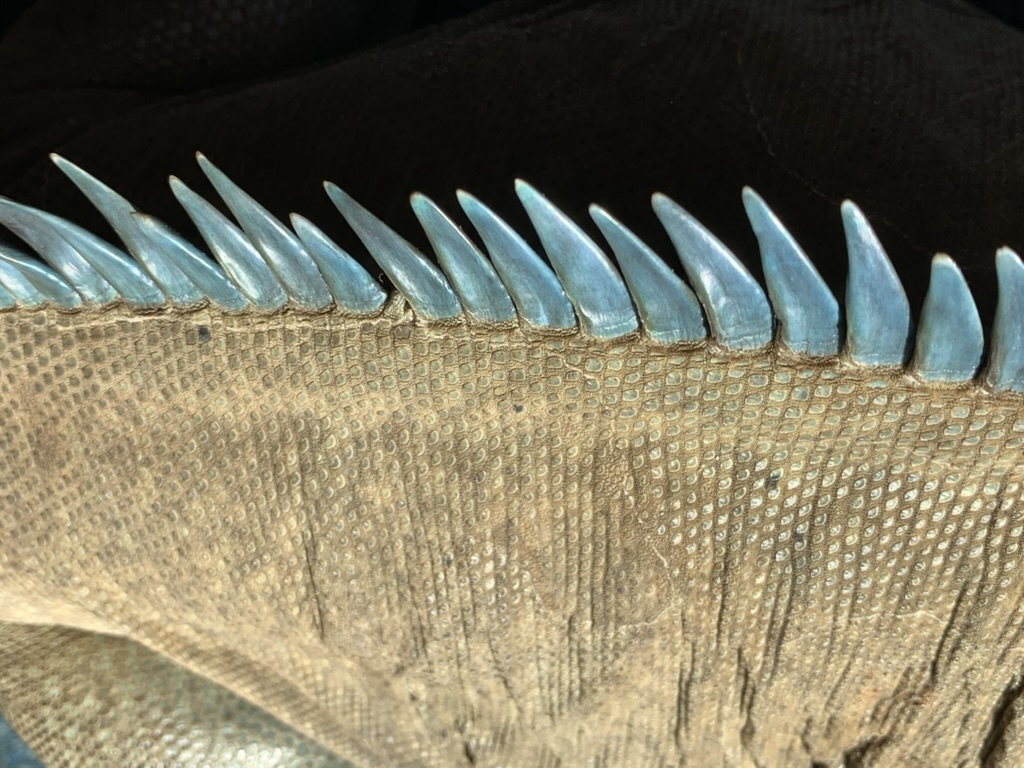
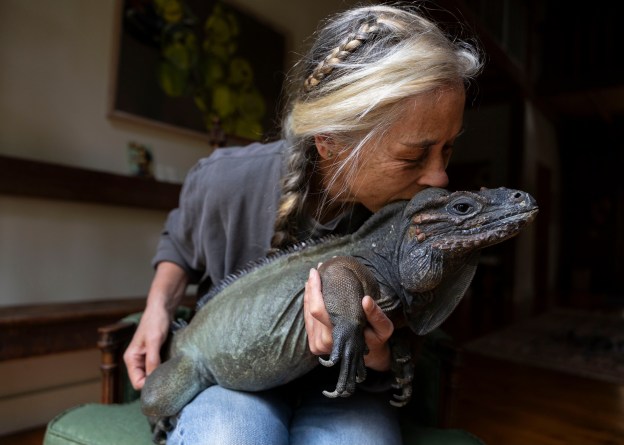
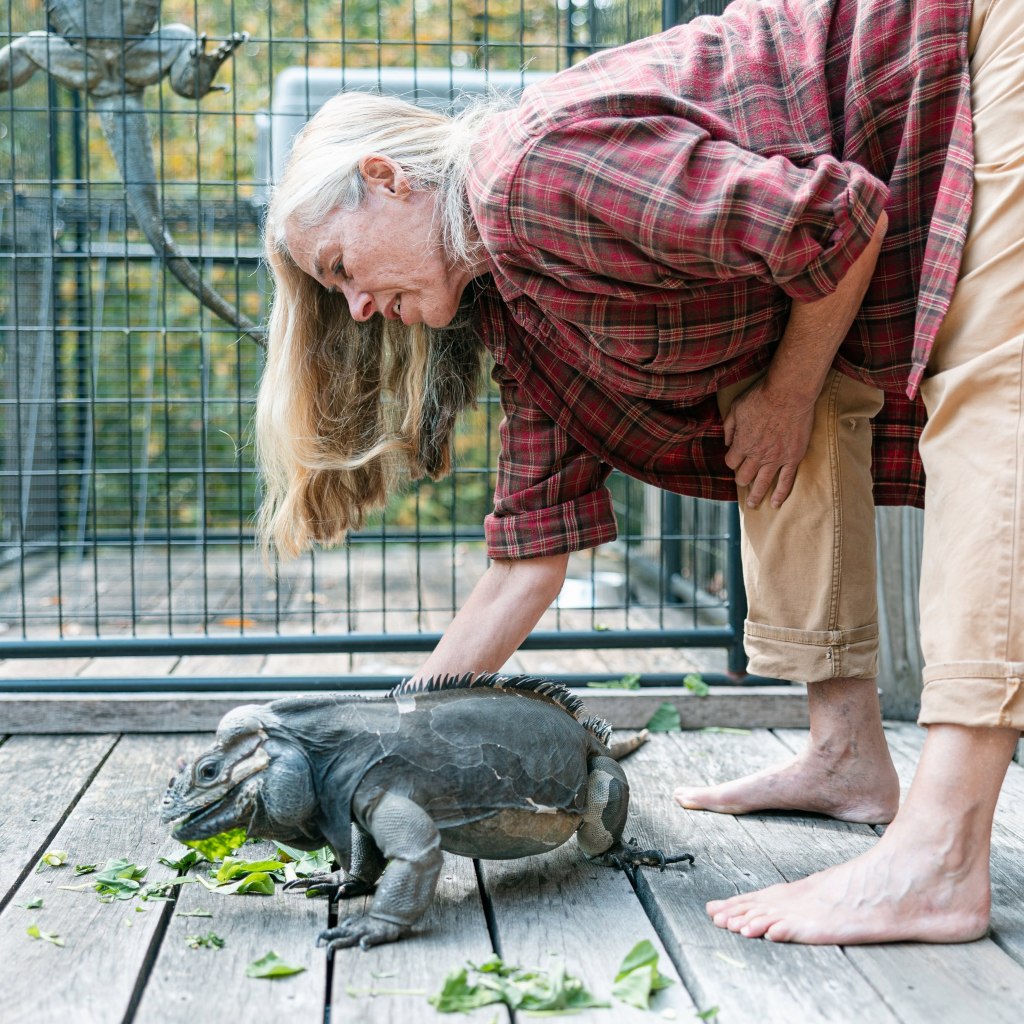
I was not born a person who could do well in our culture without the companionship of the wild. I had my Martha Stewart moments and desires, my longing for domestic comforts, but I disdained fabric softener and all scented home and body products. I was quite sure that frogs hated them, too.
After I got kicked out of the garden, I moved through life with such fear of failure that the awkwardness of putting one foot in front of the other almost stopped me. I was blown around by the ideas of others as to what I ought to be doing. Mainly my grandparents’. I ran with their directives to excel in school using perfectionism as my whip. Only the best grades would do.
Then what?
I searched for clues as to how I should put my life together. I couldn’t see myself fitting in anywhere. I didn’t know who or what to become and I felt the clock ticking. I could be a homeless person. I tried things that were not right for me. I didn’t know what I wanted to do besides make things with my hands and play with lizards. (How’s that going to pay the rent!) The whole time, my iguanas were there, witnessing. Keeping me connected to that core self of the garden where I’d originally felt my feet on the ground, and where my heart was soft and open. Funny how the answers are often right there in front of us.
“Nature holds the key to our aesthetic, intellectual, cognitive and even spiritual satisfaction.” E.O. Wilson
The book I am writing is called IN LIZARD TIME: THE BRILLIANCE OF SPOT, GOOBER, AND OTHER IGUANAS.
It’s about healing our broken relationship with Nature.

Ava and me
When I was a child, staying with my grandparents in their house in rural Indiana, there were cool spring mornings when they were at work in the garden, and frogs and turtles and snakes were not out yet. While the outdoors warmed up, I would linger in the house, having it all to myself. I would sit down at the piano and wriggle my toes in the white wool carpet and push down on some keys and listen to the notes fade in the quiet house, while the bright light of the early morning filled up the room.
I felt calm and excited at once, anticipating life waking up, and more. In that state of being, I felt such freedom in allowing my mind to wander, and my feelings to surface where I could explore them. I don’t mean happy, sad, scared, but ones I couldn’t yet name: longing and yearning and desire, and by desire, I don’t mean sex, but intimacy with life beyond me, and within me. I was in lizard time.
In my life today, when I set aside being too busy, and I am taking time with my iguanas, and we are looking at each other, we are connected. Lizard time is the doorway to my truest self where compassion lives, where stress-hardened edges of me soften so that I can open and re-enter a place of creativity, of solutions to problems I’ve been grappling with. Lizard time takes me to a place where love rules, and I can again see what I am striving for and why.
Author Ed Yong says, “When I became a birder, almost everything else fell into place…I see it as an immersion in the true reality.”
When you sit with a lizard, watch birds at the feeder, hang out with your dog or cat, watch lightning bugs, listen to spring peepers, you’re on lizard time. Connecting with an animal is like meditation, only better. The emotional place animals take you to is so much more surprising and fascinating than being alone in your own head. You open to the richness of your feelings.
****
Professor and former United States Secretary of Labor Robert Reich’s advice to young people is “to find a place inside themselves that is completely authentic and peaceful and that does not need or depend on or require in any way social media.”
We’re losing one of the best ways for us to do that: Nature.
Connecting with Nature reminds us that we’re not separate from but belong to our vast, global community of life.
“We are here to awaken from our illusion of separateness.” –Thich Nhat Hanh
Recently I listened to a program on NPR’s The World: “People in Morocco can feel lonely while never being alone.” This is despite the Moroccan culture of community engagement, togetherness, and emphasis on the value of living in extended families. There’s no mention of companion animals in the story.
In 1980 the English art critic and writer John Berger wrote, “With their parallel lives animals offer man a companionship which is different from any offered by human exchange. Different because it is a companionship offered to the loneliness of man as a species.”
We can say that loneliness is a human condition. That we find out necessary things about ourselves when we’re lonely. Sometimes. Prolonged or chronic loneliness is not good for us, though.
It’s Lizard Time’s argument that the loneliness and disconnectedness we’re suffering has everything to do with our disconnect from Nature and the disappearance of wildlife, our animal family. Not a new argument, but I think we need to keep making it, and the best way I know is to write the story of living and working with iguanas.
In writing about learning from iguanas, I am showing what we can all learn about ourselves, about being human, by getting to know beings of different species. And why does that matter?
In Vanishing Treasures, author Katherine Rundell says, “The greatest lie that humans ever told is that the Earth is ours, and at our disposal. It’s a lie with the power to destroy us all.”
I remember thinking this, feeling it as a young person, and trying to talk about how we act like we’re separate, not animals at all, and how we adjust science and religion to justify dominance and exploitation of Earth.
The Earth is not our ATM. (Pretty sure Rainn Wilson said something to that effect.)
Captive iguanas acclimate to us, but they are still wild animals. The effort of winning trust and learning from them is incredibly rewarding. Iguanas have always kept me connected with wild nature, and I need that for soul survival. I think a lot of us do, too.
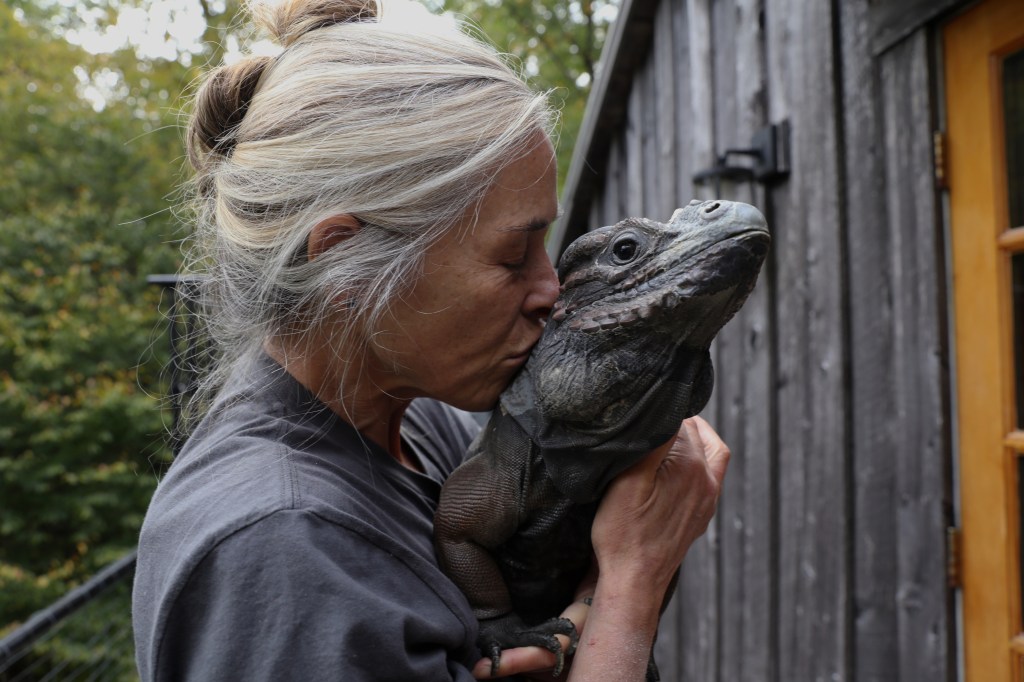
In Alexandra Alter‘s New York Times article, A Hare, a Fox, an Owl, a Snail: Animal Memoirs Are Going Wild, she writes, “As a lifelong animal lover, I’ve lately been absorbed by a popular and growing subset of animal memoirs — stories that explore what it means to connect with an untamed creature, and why such relationships can be so exhilarating and transformative… As someone who grew up with an abundance of pets thanks to an indulgent, animal-loving father, I’m enchanted by the nonhuman protagonists in these memoirs, which remind me of the joyful, unpredictable chaos of living with animals… Many of the writers describe how forming a connection with another creature…changed their understanding of themselves and their humanity and broadened their capacity for compassion and empathy.
“’One of the things that living with animals has done for me is it’s allowed me to see the world through other eyes, it’s made the world bigger to me,’” says Helen Macdonald, author of the memoir H Is for Hawk. “’There is a human hunger for a much more intimate close contact with animals…People want to read about people and animals because it’s a very comforting place to go, and everything right now is terrifying…’”
In Chloe Dalton’s Raising Hare the author “describes how the rhythm of her life and her sense of self changed when she brought home a baby hare. Once mature, the hare began venturing outside of the garden walls, disappearing for stretches, sometimes weeks at a time. But to Dalton’s astonishment, she always returned, waiting patiently by the door to be let in.
Her quiet presence had a profound effect on Dalton. ‘Her behavior stilled me and calmed me and made me feel differently about my life,'” says Dalton.
Of Dalton’s memoir, NY Times columnist and author Margaret Renkyl says, “In learning to love an orphaned hare, Chloe Dalton learned to love the whole wild world. The great gift of this remarkable book is the way it teaches us to do the same.”
“Our collective longing to connect with animals,” says Alter, “is evident in the viral popularity of animal celebrities on social media,”
The fact that the digital animal media brand The Dodo gets 2.5 billion video views per month, that the world is now obsessed with Punch and his stuffed toy, that Flaco the owl stole our hearts for a year and beyond is clear evidence of our collective longing for a connection to animals and nature to ease our human loneliness.
“’It’s a very old yearning that our kind has,’” said the naturalist Sy Montgomery, who has written dozens of books about animals, including How to Be a Good Creature, which chronicles her relationships with 13 animals, among them an octopus named Octavia.”
In How to Be a Good Creature, Sy Montgomery watches a tarantula walk across her open palm. “And then,” she says, “something magical happened. Holding her in my hand I could literally feel a connection with this creature…A wave of tenderness swept over me as I watched her walk, softly, slowly, and deliberately, across my skin.”
Feeling tenderness strengthens us.
Jarod Anderson’s memoir Something in the Woods Loves You is the story of how Nature helps him find self-acceptance in the darkness of severe depression. He finds that a walk in the woods is not quite enough; what’s missing is connection with other beings, human and nonhuman.
Anderson gets a job working for The Ohio Wildlife Center, a nonprofit wildlife hospital. He says, “…the people and animals I met were life changing…those injured creatures…had incredible power to shift worldviews.
Raccoons, coyotes, barn owls. Foxes and gray rat snakes [and a snapping turtle] …It was impossible to be unmoved by these encounters…Those creatures, that place, arrived in my life at a pivotal moment and gifted me with exactly what I needed.
They gave me permission to…reframe the natural world from a source of awe to something more fundamental and intimate. Not a spectacle or a curiosity, but a pathway to understanding myself.”
Author of George: A Magpie Memoir, Freida Hughes says of the magpie she rescued, “His warmly feathered presence was like having an emissary of the natural world grounding me daily.”
Of Catherine Raven’s 2023 bestselling memoir Fox and I, Good Morning America’s Zibby Owens says the author’s reflections “shine a spotlight on the path out of loneliness, reminding us all that nature itself will ensure none of us are ever truly alone.”
The experiences and bonding we can have with an animal of almost any species open our heart, expand our souls, soothe our spirits, spark curiosity, wonder, and give relief from the noise and excessive stress of our lives.
Whether it’s birdwatching, volunteering at a wildlife sanctuary, befriending a fox, tending a garden —think Braiding Sweetgrass— or rescuing owls, hares, or iguanas, a connection with nature will open your heart and nourish your soul.
We need animals and plants for physical and emotional survival. And all animals —fox, hare, owl, tarantula, octopus, hawk, iguana, dog, human— all of us depend on the global web of life that is biodiversity, which is why it is essential that stories of relationships with all kinds of animal species are crucial to our understanding of why nature matters, and that we can and must save it by acting now.
***

