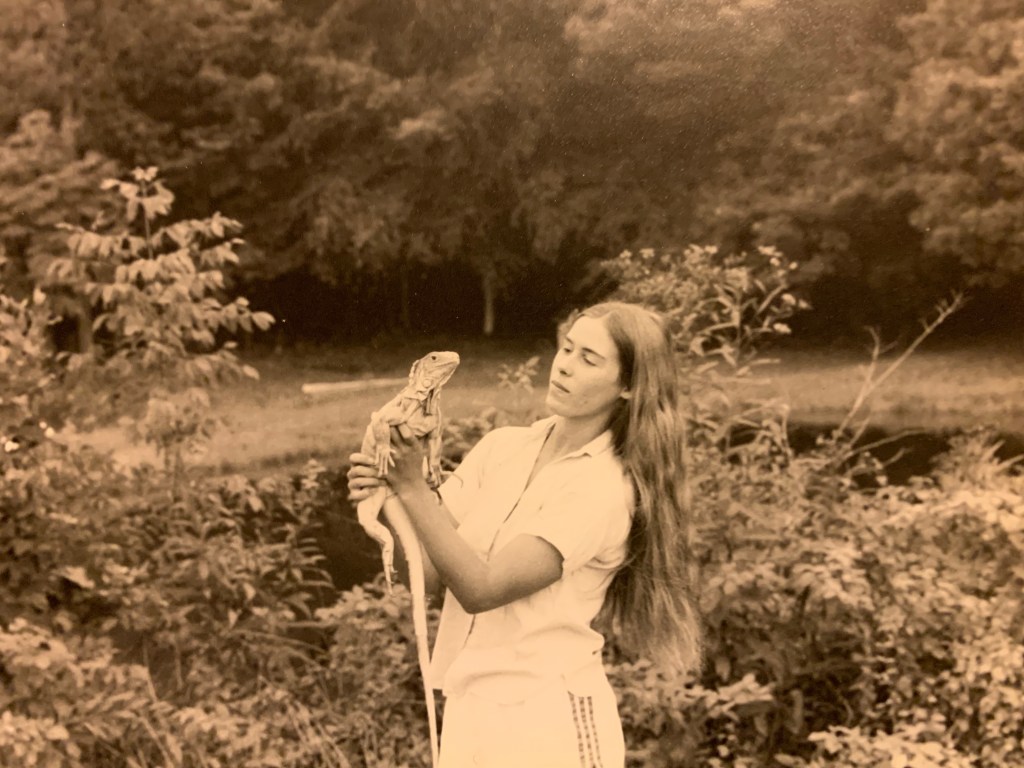
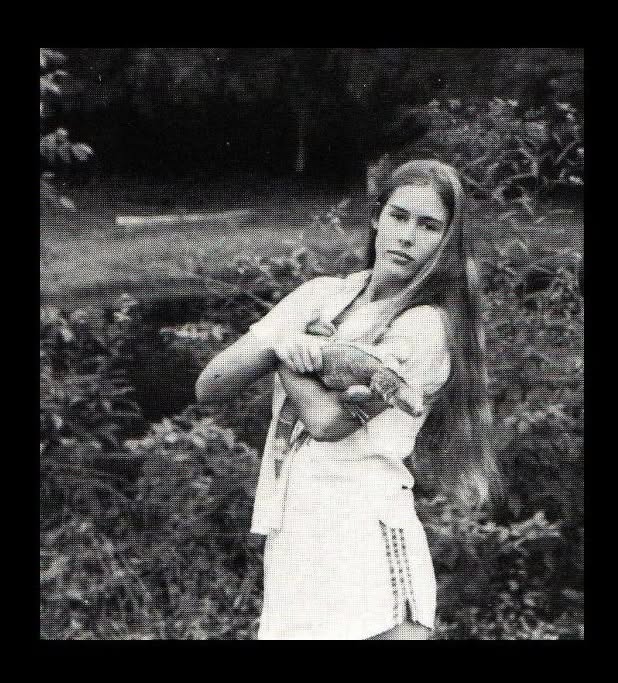
Wendy, 16, with her green iguana named Weener, by the pond on her grandparents’ Indiana farm.
She met her first green iguana when she was 8 years old. For more than half a century, she has lived with and studied iguanas of different species. She belongs to the IUCN Species Survival Commission Iguana Specialist Group.
For ISG conferences she has traveled to Roatan and Utila Islands in Honduras, Dominica, Belize, Guatemala, and Baja Mexico to observe endangered iguanas in the wild, and to confer with colleagues about environmental education and outreach. Of 46 iguana species, 26 are on the IUCN Red List of Threatened Species. Engaged with the International Iguana Foundation, Wendy is a relentless iguana and biodiversity conservation advocate.
In 2019, Wendy followed conservation biologist Dr. Stesha Pasachnik into the rugged Hellshire Hills of Jamaica, a biodiversity hotspot, to write about the Jamaican iguana’s incredible comeback from the brink of extinction.
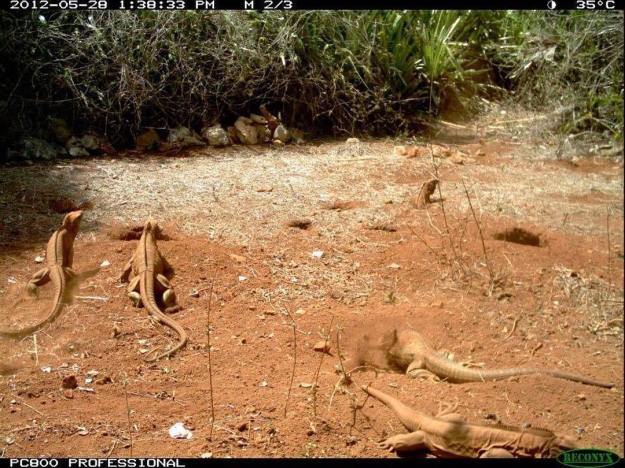
Near base camp in Hellshire, Wendy sat in a blind and witnessed female Jamaican iguanas converge on a small clearing. By mid-afternoon, it was 100 degrees F, dry as a desert. A dozen iguanas were in motion, digging nest burrows in the brick red earth, kicking it up in sprays, walking high up on muscular legs, their red-dusted lizard bodies and long tails curving as they turned in half circles to check on their work. It was a dance of red dragons. Two iguanas went nose-to-nose with their chins and bellies on the ground; rapidly bobbing heads to say, this is my nest! A plume of red earth shot out of a hole as the tail and rear legs of one lizard wriggled out backward while another came out of her burrow headfirst to push and kick soil across its entry. Her flanks were sunken; she had laid her eggs.
Stesha said, “None of the babies that hatch would survive.”
But many would survive in the Hope Zoo head start program, and when the hatchlings had grown big enough to be safe from invasive mongoose and feral cats, they would come home to Hellshire.
The Jamaican iguana had been written off as extinct for nearly 50 years until Edwin Duffus found one in the Hellshire Hills in 1990. Fast-forward to 2026, the Jamaican Iguana Recovery Program might even exceed the goal of 1,000 Jamaican iguanas returned to the wild. In the countdown we are at 944!
With Fredric L. Frye, DVM, Wendy is the coauthor of Iguanas: A Guide to Their Biology and Captive Care, and with the next generation of conservationists in mind, she has authored three books for young readers. Her first YA novel Lizard Love received a Booklist star, The Sundown Rule was a Kirkus Best Book of 2011, and her third, Blue Iguana, was short-listed for the Green Earth Book Award. She has written feature articles for Reptiles magazine, essays for The Boston Globe and Talking Writing magazine, and reptile-related op eds for CNN.
Wendy earned her MFA in Writing for Children and Young Adults from Vermont College. She has led writing workshops at Empire State College, and for seven years she was on the faculty of The Writing Institute at Sarah Lawrence College.
Craving more time outdoors, Wendy left teaching to work as a reptile monitor from April 1st to October 31st, tasked by the Department of Environmental Conservation with keeping timber rattlesnakes and threatened turtle species safe on utility repair and construction sites.
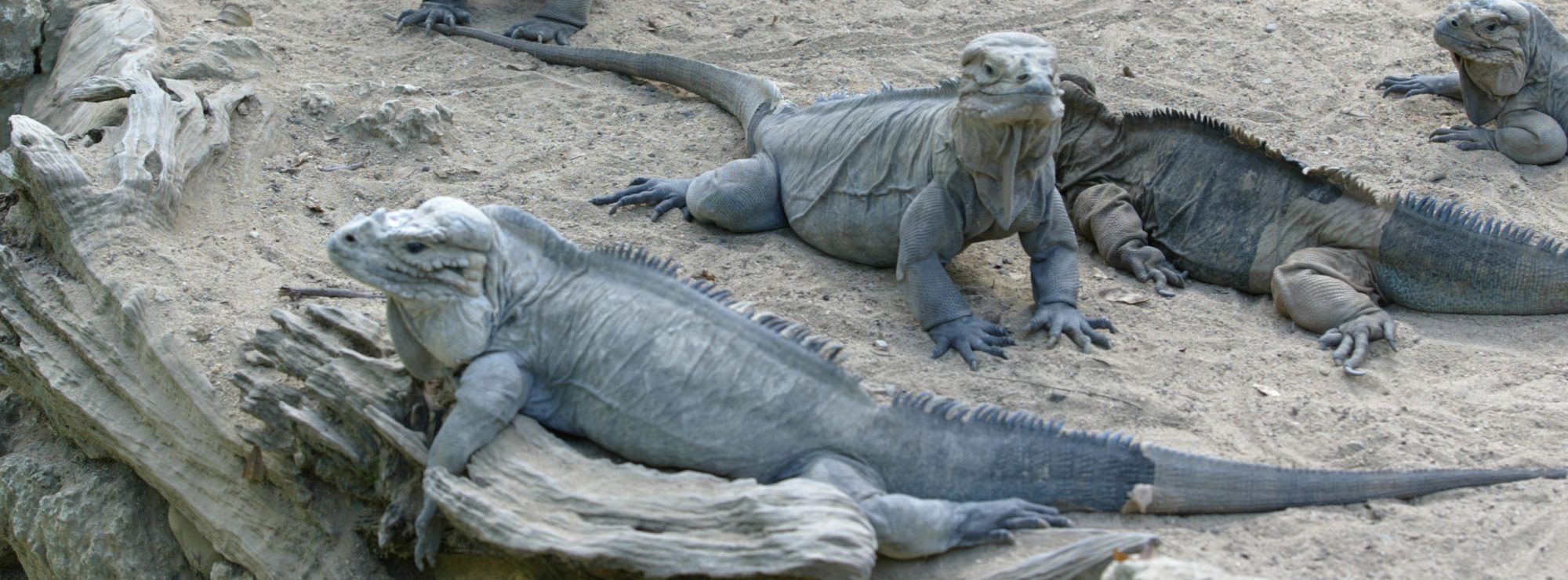
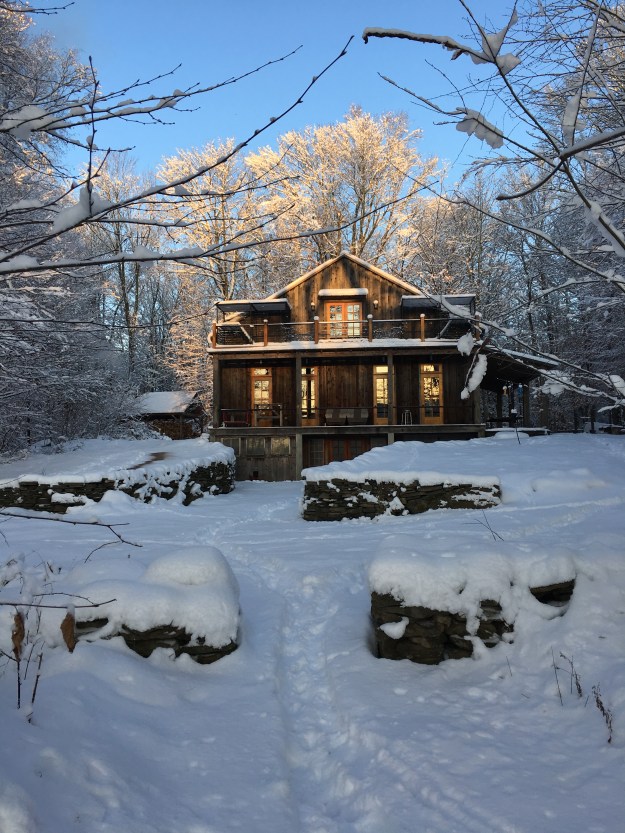
During colder months, she writes and spends time with her five rock iguanas, her husband and two cats in their Catskills barn.
Here is a link to a podcast I recorded with the Western Sullivan Public Library:
https://wsplonline.libsyn.com/intersections-wendy-townsend-laura-moran